
Why We Stopped Building WordPress Sites (And What We Build Instead)
By LaunchX on March 15, 2026
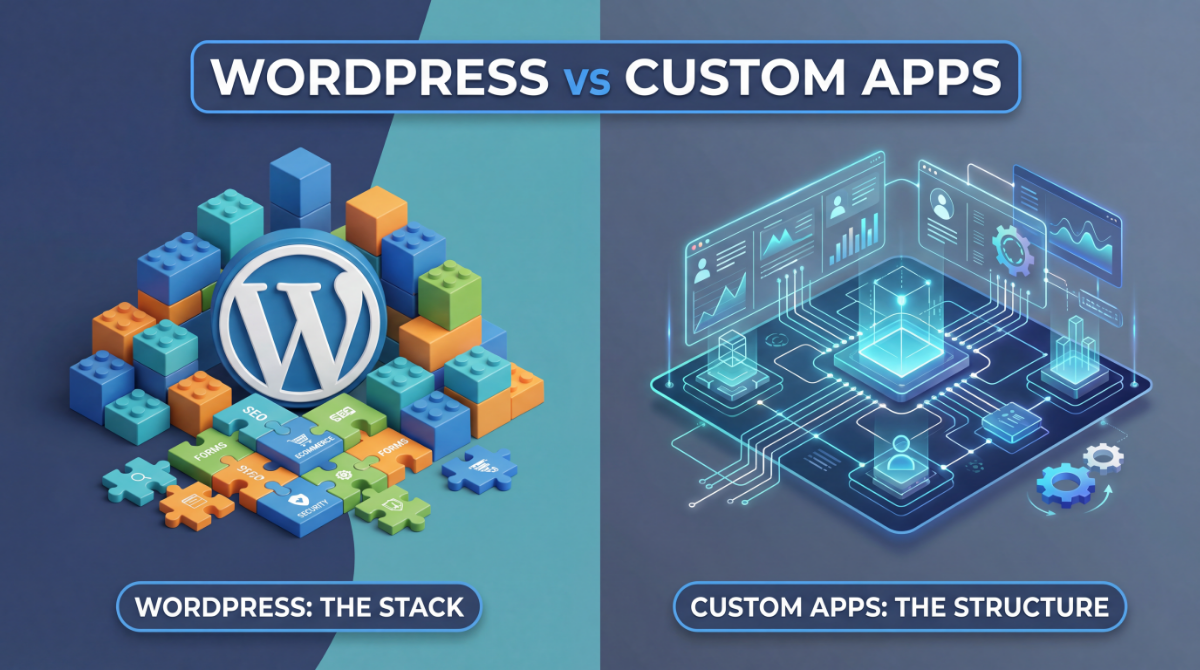
I want to be upfront about something: we used to be a WordPress shop. We built probably 40 or 50 WordPress sites for clients over a few years. Some of them were good. Most of them worked fine at launch.
The problems always showed up later.
The pattern we kept seeing
A client would come to us with a site we built six months ago. It was slow. Or a plugin had broken something. Or they'd been hacked through a contact form plugin that hadn't been updated. Every time, we'd fix it. Bill for it. And then wait for the next one.
After a while you start to notice you're spending more time maintaining these sites than you spent building them. That math doesn't work for anyone, including the client who keeps getting surprise invoices.
What actually went wrong
The root issue with WordPress, at least for the kinds of businesses we work with, is that it was built for blogging in 2003 and then got stretched to do everything else. Need e-commerce? Plugin. Need forms? Plugin. Need it to load in under 3 seconds? Good luck.
We had one client running 34 plugins. Thirty-four. Each one with its own update cycle, its own potential security holes, its own JavaScript that gets loaded on every page whether it's needed or not. Their homepage took 7 seconds to load on mobile. That's not a website, that's a test of patience.
The security situation was worse. WordPress powers something like 40% of the web, which makes it the biggest target for automated attacks. We were patching vulnerabilities monthly, sometimes weekly. One client got hit by a brute-force attack on their admin login that we only caught because their hosting bill spiked from the traffic.
What we switched to
We moved to building custom web applications with Next.js and React. The short version of why: the app only includes code that's actually needed. No plugin bloat. No database queries for features nobody uses. The security surface is dramatically smaller because there's no public admin panel with a predictable URL.
The first custom app we built loaded in 1.2 seconds on mobile. The WordPress version of the same site was at 4.8 seconds. Same content, same images. The difference was entirely architecture.
For our clients, the change meant fewer surprise issues, faster sites, and a platform that could actually grow with their business instead of fighting them at every step.
This isn't a universal truth
I should be clear: WordPress still works for some use cases. If you need a simple blog and you're comfortable managing updates yourself, it's fine. If you have a developer who knows WordPress inside and out, it can be made to work well.
But for businesses that need their site to be reliable, fast, and secure without constant babysitting, we found that building something purpose-built just works better. We stopped fighting the tool and started building the right tool for the job.
That's the boring, honest version. No dramatic revelation. Just a gradual realization that we could do better work a different way.
Curious how your site stacks up?
Free PDF audit. No call. ~5 minutes.
Ready to build something better?
LaunchX builds, hosts, and manages custom web applications. One partner, one platform, zero maintenance headaches.